
Clear aligners
Clear aligners are removable, transparent trays used to straighten teeth discreetly. Brands like Invisalign, ClearCorrect, and others use custom-made plastic trays that gradually shift your teeth into place—without the look of braces.
⭐ What Clear Aligners Are
Clear aligners are transparent trays that are:
Nearly invisible
Removable (for eating, brushing, and special occasions)
Custom-made using 3D scans of your teeth
Worn in a series of trays, each moving teeth slightly
You typically switch trays every 1–2 weeks.
⭐ Benefits
Very discreet — look like thin, clear retainers
More comfortable than braces (no brackets or wires)
Easy cleaning of teeth and aligners
Fewer food restrictions
Fewer in-office visits in many cases
⭐ Drawbacks
Require 18–22 hours/day wear — compliance is crucial
Not ideal for very complex orthodontic cases
Can be more expensive than braces
Easy to misplace since they’re removable
May cause a slight lisp at first
⭐ Treatment Time
Usually 6–24 months, depending on:
Complexity of tooth movement needed
Consistency with wearing aligners
Age
Simple cases are often faster than braces.
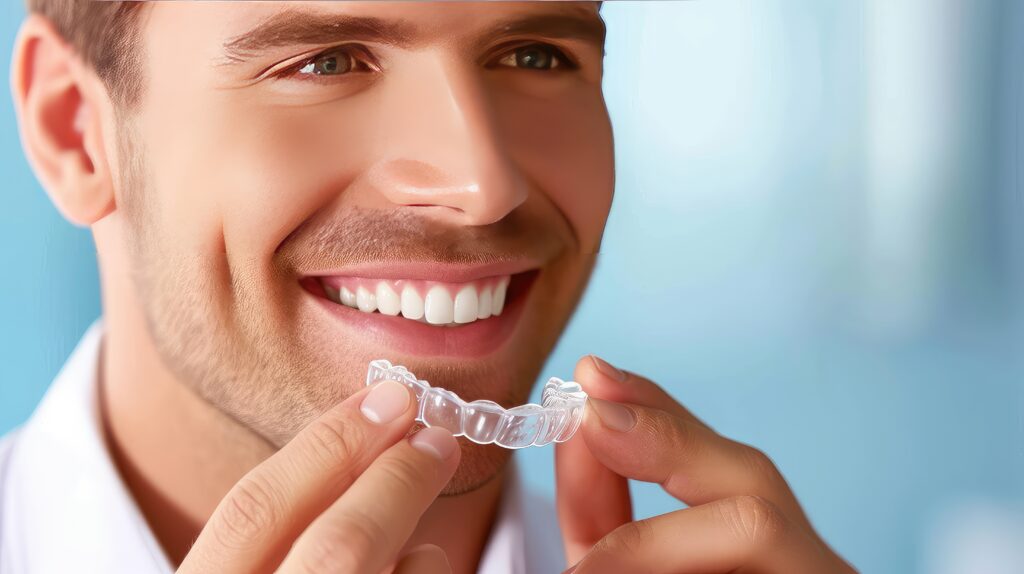
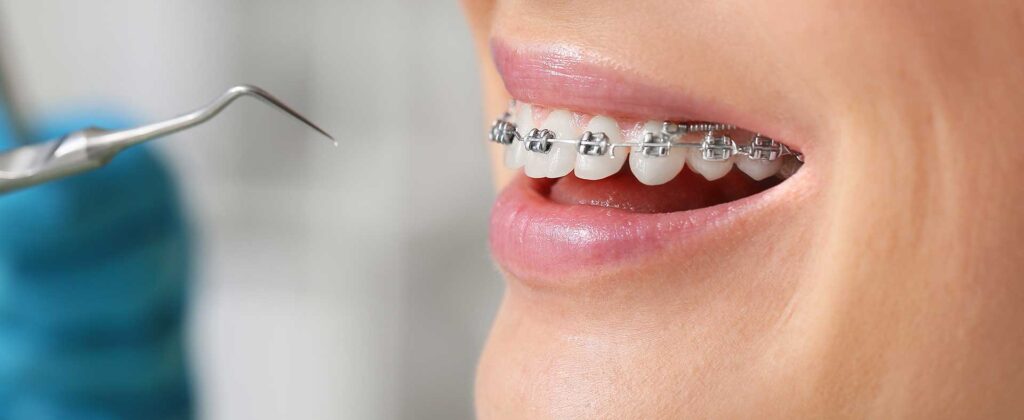
Comparison: Clear Aligners vs. Metal Braces vs. Ceramic Braces
| Factor | Metal Braces | Ceramic Braces | Clear Aligners |
|---|---|---|---|
| Aesthetics (Look) | Very visible — metal brackets and wires are obvious. | Much more discreet — tooth-colored or clear brackets blend in more. | Most discreet — clear, removable trays are almost invisible. |
| Durability / Strength | Very strong and durable. Good for complex cases. | Less durable than metal; ceramic brackets can chip or break more easily. | Depends on the material; less risk of breakage since no brackets. Must be worn consistently to work. |
| Treatment Speed | Can be quite fast, especially for more difficult cases. | Treatment may be slower compared to metal because of more friction. | Depends on case complexity and discipline. They only work if worn properly. |
| Comfort | Initial discomfort; brackets can irritate cheeks/lips. | Smoother than metal, gentler on soft tissues. | Generally more comfortable; no brackets or wires. |
| Oral Hygiene | More challenging — requires careful brushing. | Similar to metal; sometimes harder around larger brackets. | Easier — aligners are removed to brush and floss. |
| Staining | Brackets don’t stain, but elastics might. | Ceramic doesn’t stain, but elastics can. | Aligners may discolor if not cleaned or worn while drinking colored beverages. |
| Compliance | Low — fixed in place. | Low to moderate — also fixed. | High — must wear 20–22 hours/day. |
| Best For |
- Complex cases - People who don’t mind visible braces - Budget-friendly choice |
- More aesthetic look - OK with more care/cost - Teens or adults avoiding metal |
- Image-conscious adults/teens - Mild/moderate issues - Disciplined wearers |
⭐Which One is Likely Best for You? (Depending on Your Priorities)
If you care most about cost: Metal braces are generally the cheapest.
If you want something less visible but still fixed: Ceramic is a good middle-ground.
If you want something very discreet and don’t mind
wearing trays a lot: Clear aligners are probably best.
If your teeth problem is very complex: Metal braces might handle it better (because of their strength and fixed nature).
If hygiene is a concern: Aligners give you a big advantage since you can remove them and clean more thoroughly.